I'm Jan. I connect operations, technology, and the way people work.
The person behind the systems
I've always believed in the idea of working smarter, not harder. Not by cutting corners, but by finding better ways to solve problems, simplify repetitive work, and spend more time on the things that actually matter.
That mindset is what drew me to technology, automation, and AI. I enjoy thinking critically, asking questions, and figuring out how things can be done more efficiently — whether that means improving a workflow, automating a tedious process, or simply finding a better way to get from point A to point B.
I'm a Computer Science graduate who enjoys building practical solutions that make everyday work a little easier. Over the years, I've worked as a Virtual Assistant, AI Agent Builder, and Automation Specialist, helping businesses and teams improve their workflows, automate repetitive tasks, and make better use of technology.
Today, I work as an Executive Assistant focused on Operations and AI Agents, combining operations, automation, and AI to solve real problems and help things run more smoothly.
This site is also a place for me to share what I learn along the way — from AI agents and automation to operations, tools, experiments, and lessons from the work I do.
If any of that interests you, feel free to look around. You might learn something useful — and hopefully, so will I. :D
Explore the agents and connected workflows I’ve built. Select a project to inspect the system, its tools, and the work it does.
Orchy
AI orchestrator · multi-business · approval-first
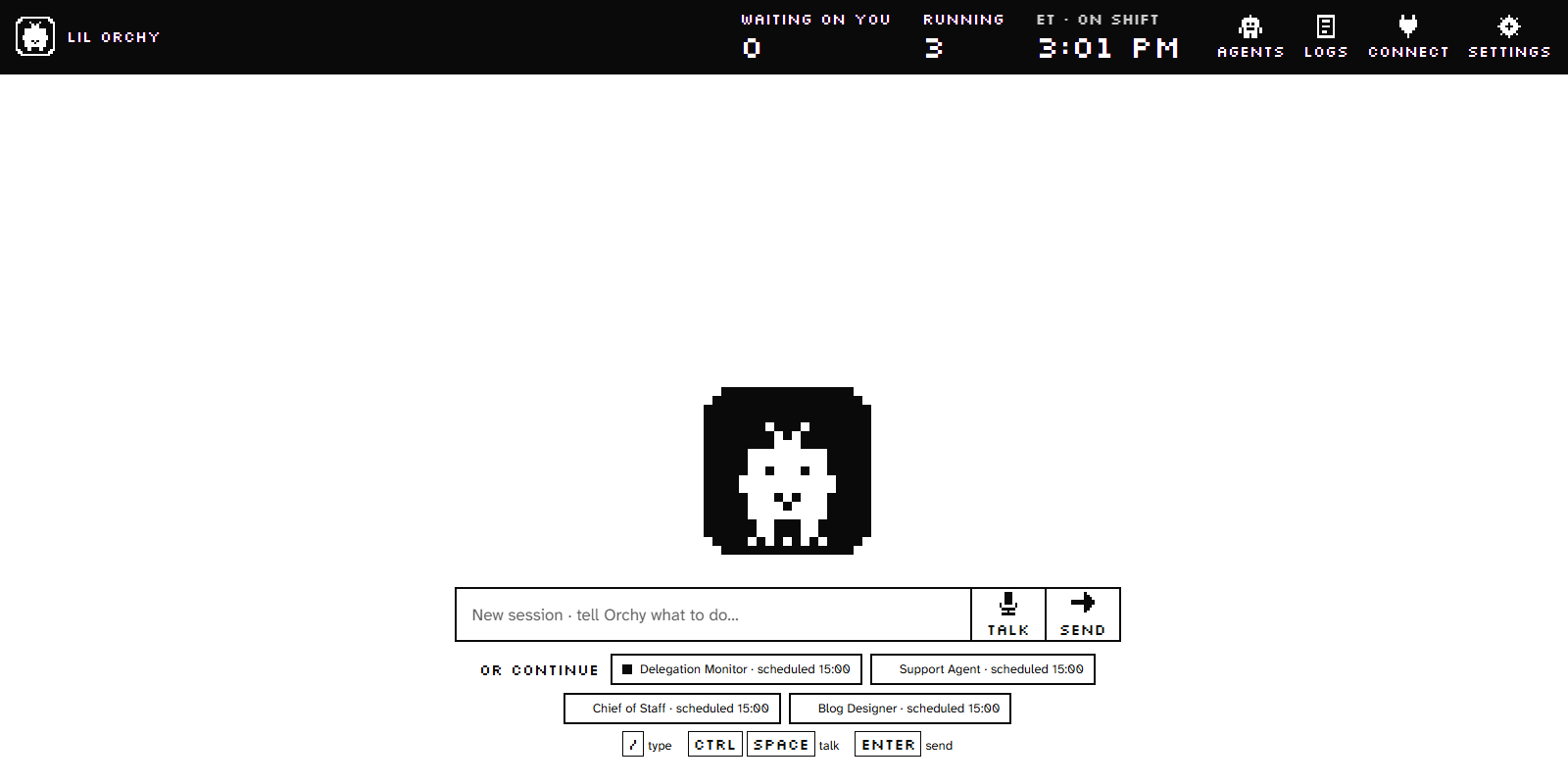
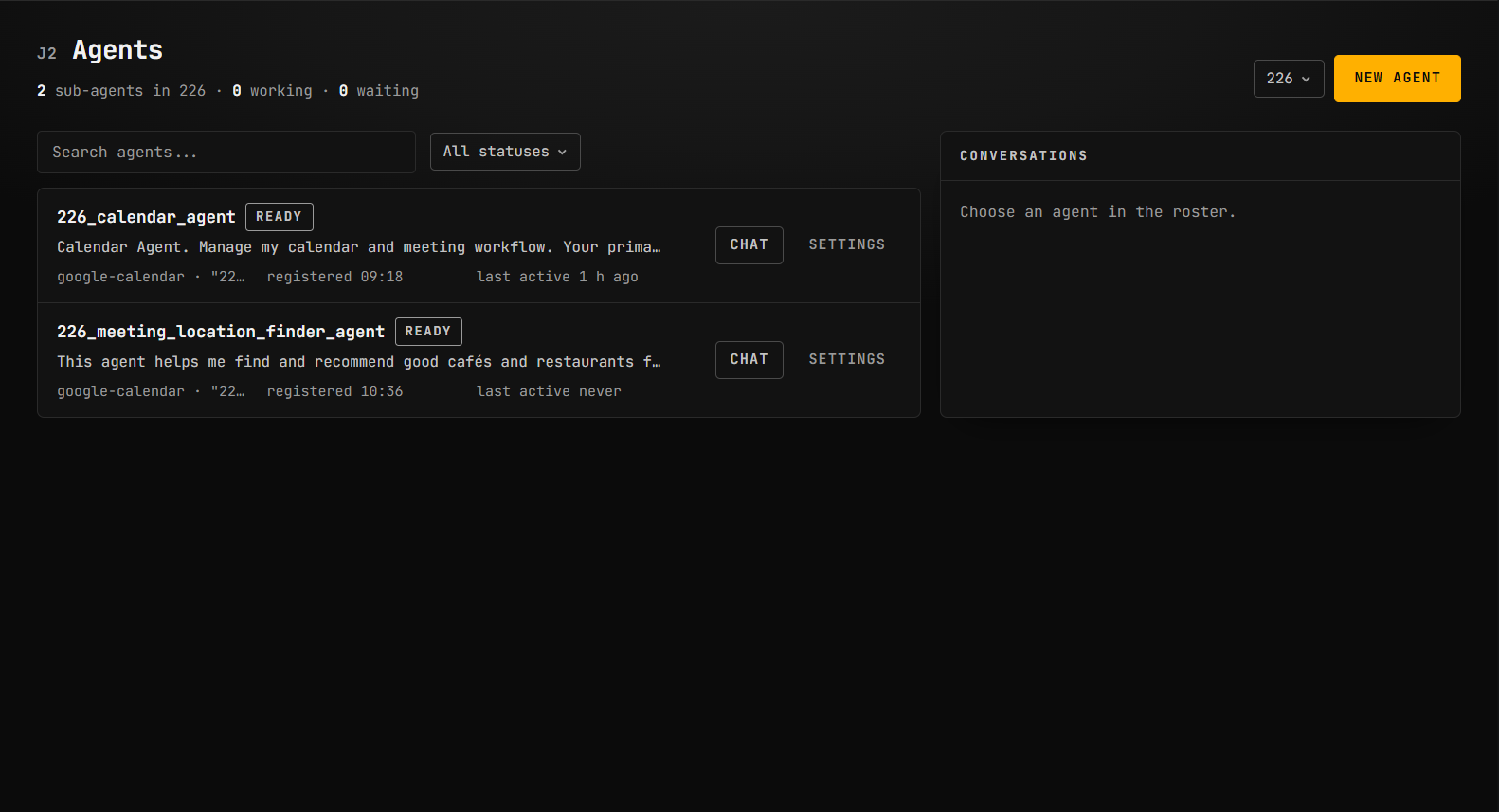
Orchy is one place to run several businesses with AI agents. I give it an instruction in plain language and it uses Jev, a TypeSafe model, to work out which business, agent and model fits, then runs it on Claude Code or Codex under that business's own account. Each business keeps its own folder, connections and agents, so nothing crosses between them, however many I add. Anything that sends, spends, shares or deletes pauses for my approval, and when an instruction is unclear Orchy asks instead of guessing. Every run is logged, and each task keeps its own folder with a record of what was asked and what was done.
Claude CodeCodex CLIOne CLIJevTask routingApproval gate
J/OS HQ
One CLI · multi-agent orchestration · approval-gated
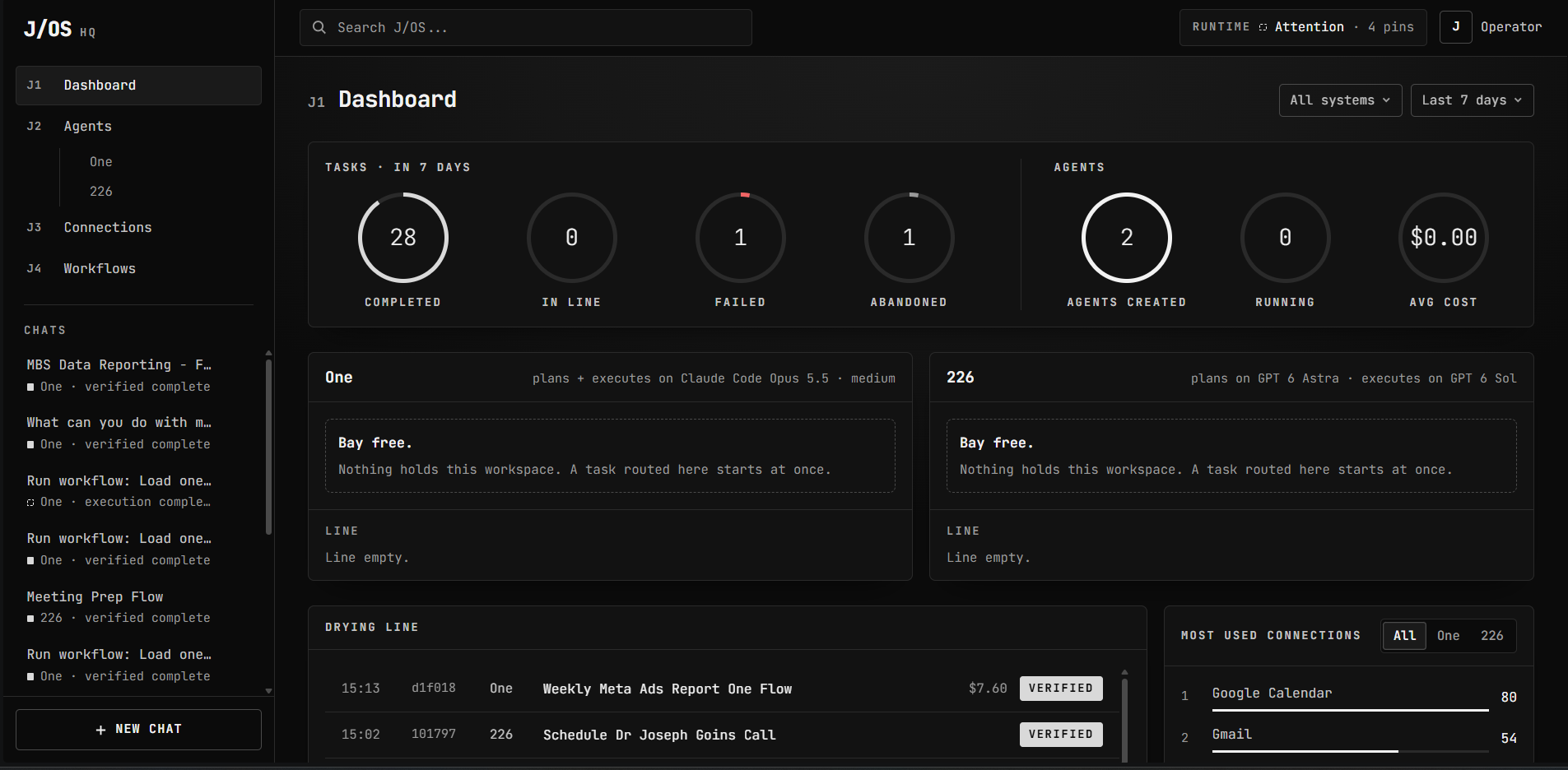
J/OS HQ is a local command center that runs AI agents for two businesses behind a single approval gate. Built on the One CLI, Claude Code, and the Codex CLI, it routes each request to the right workspace, plans it against live connections, dry-runs every external write, and requires explicit approval before anything leaves the machine. The Next.js dashboard queues and logs every task, pins each workspace's runtime, and scopes sub-agents to only their own connections.
One CLI · isolated multi-agent hub · approval-first
J/OS Agents is a private command center that runs AI agents for two separate businesses from one place while keeping the two strictly apart. Each request is routed to the right business based on the people, projects, and connected apps it mentions — when it can't tell, it asks instead of guessing. A read-only planning pass checks the real live connections before acting, work runs under each business's own account and pinned AI model, and every side effect is drafted and approved before it runs once. Every task is logged on arrival and on completion, and each agent's access is enforced in code, not just written down.
One CLIMulti-agentApproval gateWorkspace isolationAgent memory
AI Video Ad AutoSync Pipeline
n8n · AI video automation · end-to-end
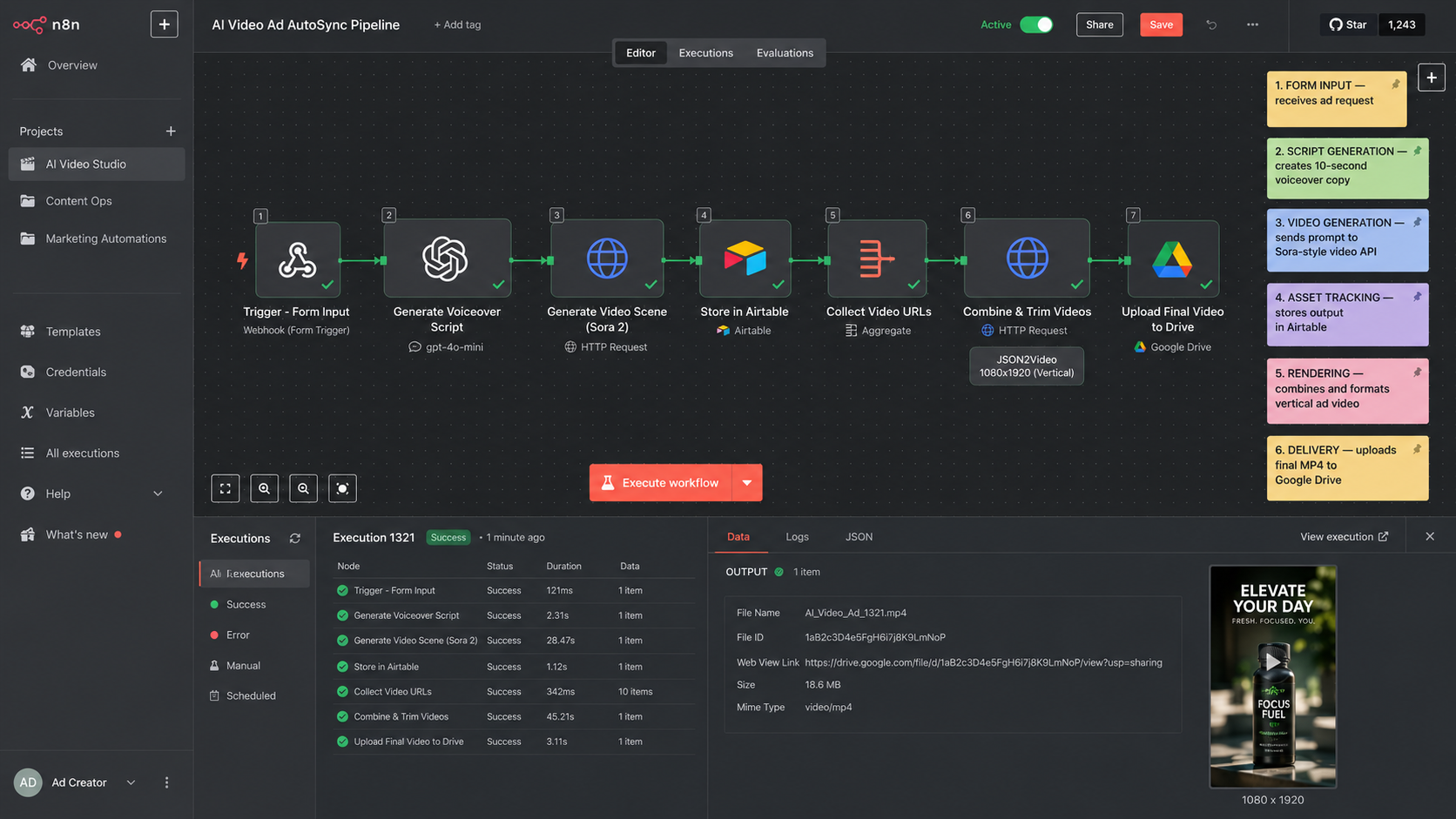
Built an end-to-end AI video ad automation in n8n that turns a simple form submission into a finished vertical video asset. The workflow uses AI to generate a short advertising script, creates video content through an image-to-video API, tracks production data in Airtable, automatically renders and formats the video for social platforms, and uploads the final MP4 to Google Drive. The system reduces repetitive production work and makes it faster to create and test multiple ad variations.
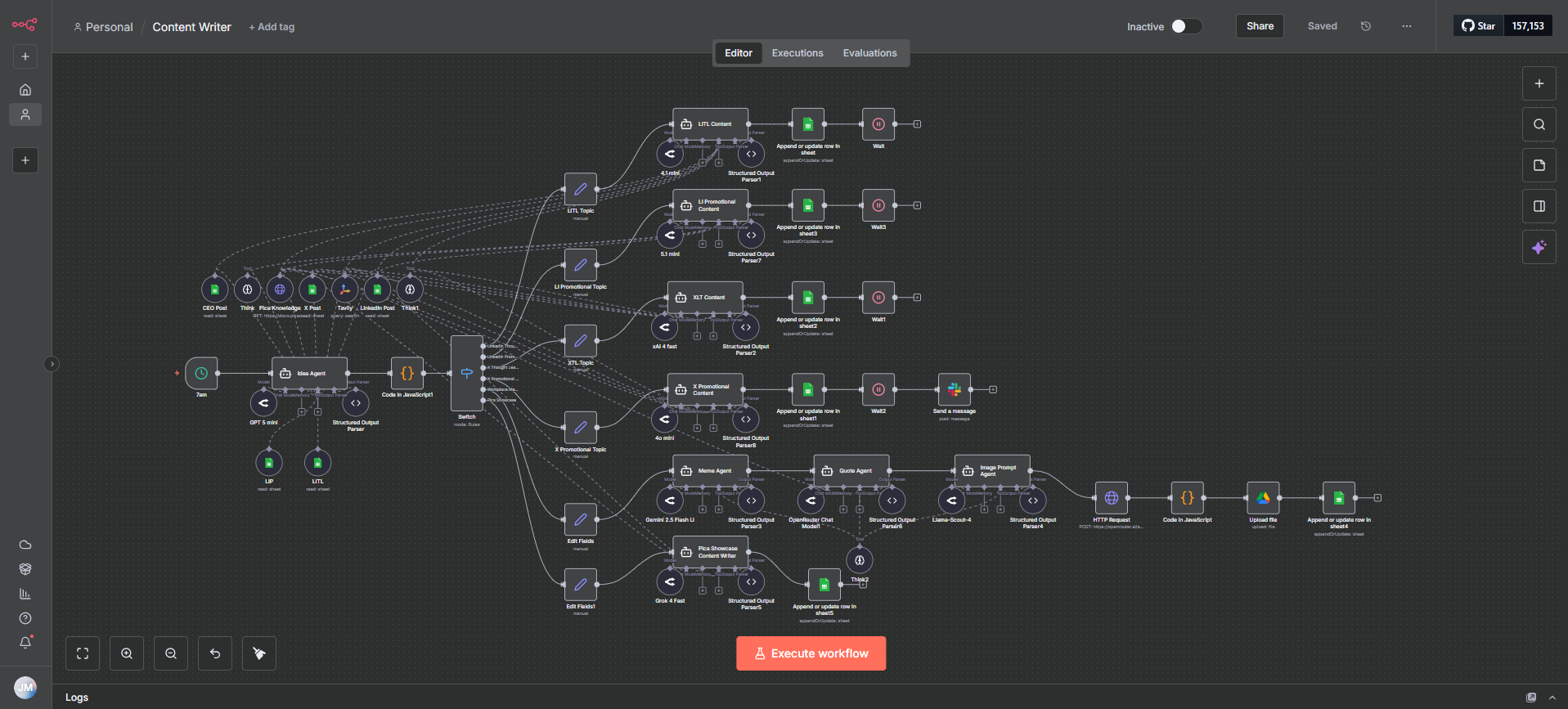
A multi-agent AI content automation system that generates, organizes, and prepares social media content across multiple channels. The workflow reviews previous content to avoid repetition, develops new ideas, routes them to specialized AI agents for platform-specific writing, creates supporting visual assets, and stores everything in a centralized review system. It also automatically notifies the team when new content is ready for approval, helping make content production more consistent, scalable, and less dependent on manual work.
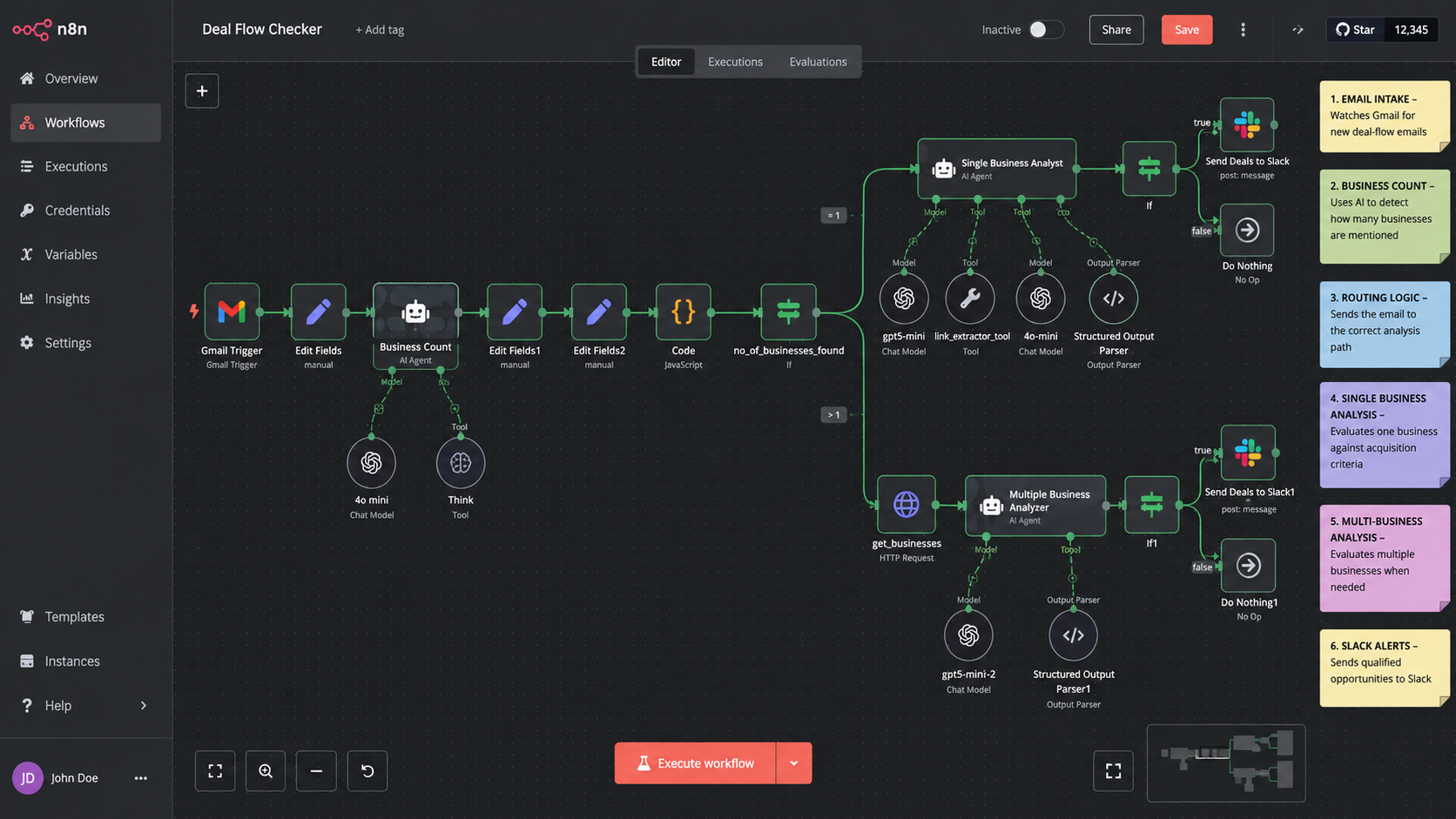
Deal Flow Checker is an n8n automation that monitors incoming deal-flow emails in Gmail and screens every business opportunity against a defined set of acquisition criteria. An AI agent counts how many businesses each email mentions and routes it to single- or multi-business analyst agents, which evaluate industry, revenue, EBITDA, location, and years active. Qualified opportunities are posted to Slack for team review, while everything else is filtered out automatically — turning a crowded inbox into a short list of deals worth pursuing.
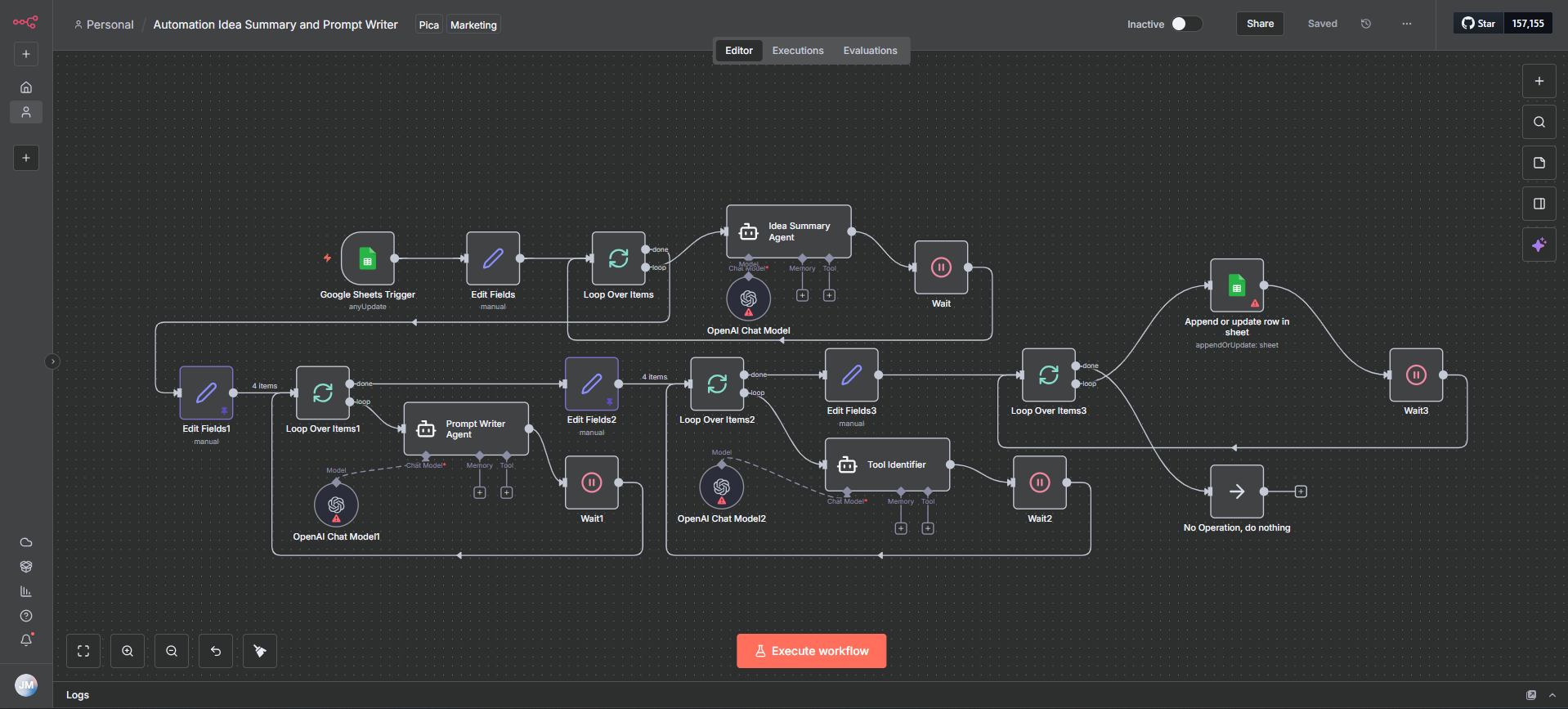
Automation Idea Summary and Prompt Writer is an n8n intake workflow that turns messy automation requests into structured, actionable data. New submissions from a Google Sheet flow through a series of AI agents: one isolates the actual automation idea, another rewrites it into an execution-ready prompt, and a third identifies the tools needed to build it. The cleaned output is written back to a Google Sheet, making every submission faster to review, qualify, and act on.
Custom AI agents and connected workflows, built around the way your business works. Here's how we get from your first idea to a system you can rely on.
Nine AI agents built on Claude Code run my marketing. What each one does, the apps it can use, how work moves between them through Notion, and what none of them can do without my approval.
Let the agent read and draft on its own, and make it stop for a yes or no before money, client messages, calendar changes, deletions and sharing. The five actions to gate, a table, and a 10-person agency example.
Four AI models wrote the same three blog intros. DeepSeek V4.1 Flash tied Claude Sonnet 5.5 at 3.93 out of 5 for about an eighth of the cost, Claude Haiku 5.5 was cheapest, and hidden reasoning made up most of every bill. Three prompts, one run each: an early signal for routine writing.
Claude Haiku 5.5 finished my research-agent task in 35 seconds, ahead of DeepSeek V4.1 Flash and GPT-6 Luna. It wasn't the most accurate, and one task proves little.
Upwork, OnlineJobs.ph, BELAY and seven more, with the details most lists skip: who can actually apply from where, what each site costs you, and the FTC's warning signs for fake VA jobs.
Know some Zapier, Make or n8n? Here's the six-stage roadmap I'd follow next: LLMs, process mapping, APIs and webhooks, integrations, AI agents, and AI systems that run safely with human approval.
Read the post
No matching notes.
Try another phrase or clear your filters.
Your next idea. Let’s build it.
A conversation is a good place to start.
An idea, a repetitive task, or a workflow that could work better. Tell me about it.